
Draw One Small Part of the View from Your Balcony
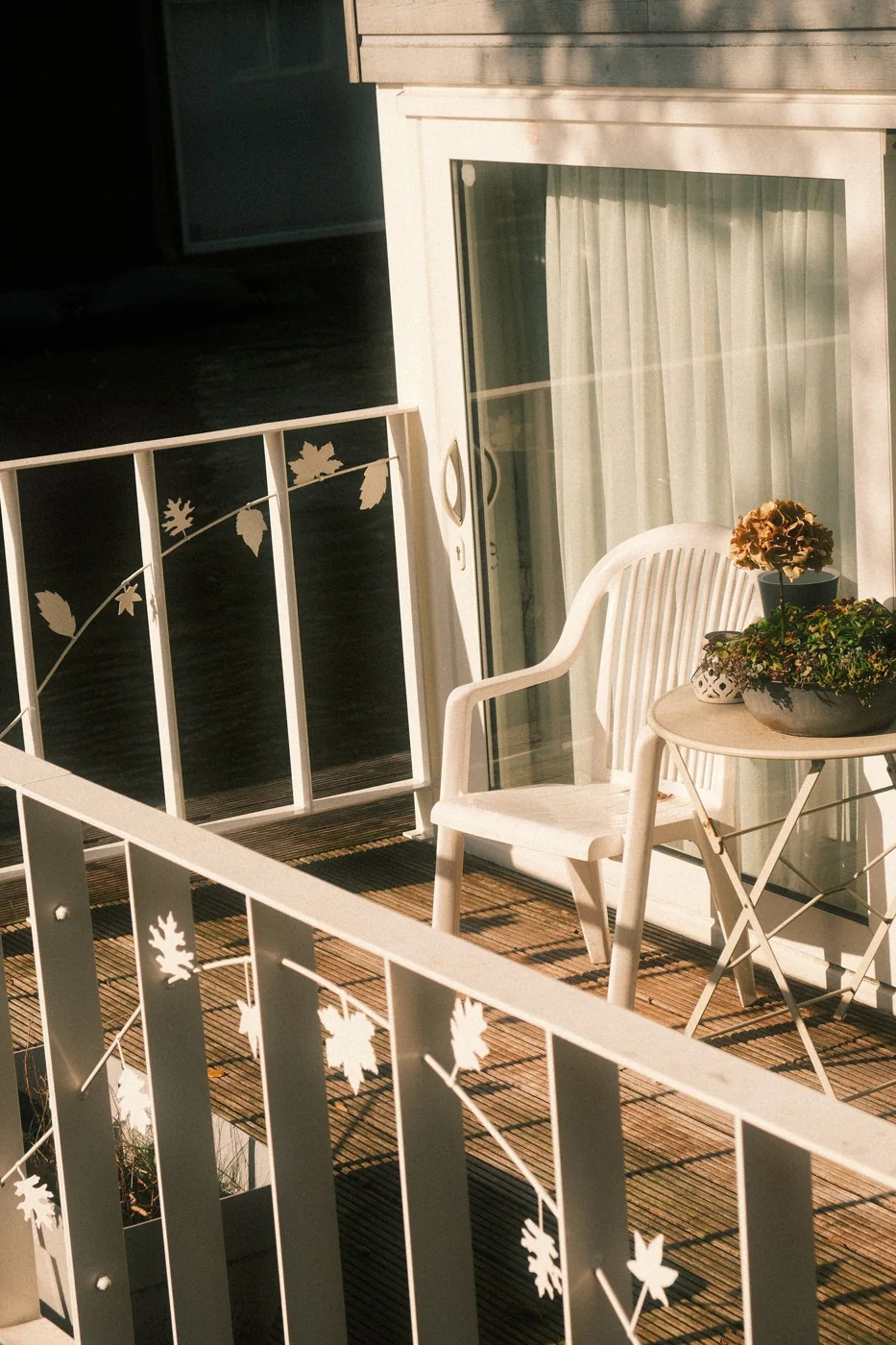
A balcony view can supply a modest drawing subject without requiring a scenic panorama. A chair, notebook and ordinary pencil are enough to begin with one visible detail. The useful limit is the part of the view you decide to observe, not a promise to produce a picture worth framing. Keep the activity within the space you already use comfortably.
Draw from an ordinary seated position
Choose the seat and position you normally use. Stay inside the balcony and leave the route back indoors clear. Do not lean beyond a railing or move furniture towards an edge to improve a composition. A small pot, the outline of your own chair or a section of the building opposite can provide shapes from the position you have.
Consider privacy when the view includes other homes. You can draw a window's rectangular outline without recording the people or private activities beyond it. If the available view does not feel suitable, bring an object indoors and draw that instead. The exercise does not depend on obtaining an unusual viewpoint.
Give the page a small boundary
Draw a loose rectangle on part of the page. Choose one subject that fits within it, rather than adding everything visible from the chair. A plant against a wall offers a different task from a whole street: one asks you to compare leaves and spaces, while the other demands many competing details.
Begin with the largest shapes. For a chair, notice the broad back, the seat and the gap beneath it before drawing the decorative slats. For a plant, suggest the main spread of leaves before choosing a few individual edges. The unused spaces between objects can be as helpful as their outlines.
Observe one relationship at a time
Compare the height of the pot with the width of the seat beside it. Ask where the table edge crosses behind a stem. These small comparisons give the drawing a structure without requiring measured precision. If a line feels misplaced, add a lighter alternative rather than repeatedly erasing the whole subject.
Shadows may change while you draw. Decide whether to keep the broad pattern you began with or simply leave shading out. The drawing can record one observation without claiming to describe the scene under every condition. A written note about the view can explain more than a hurried attempt to include every changing detail.
Finish with a useful note
Write the place and a short observation below the drawing. You might note that the chair's curved back was harder to follow than the plant pot. Keep the note descriptive rather than rating the result. If you want to keep it with other small observations, the approach in purposeful reading notes offers a similarly modest way to retain context.
Put the materials away when the pause ends. The comfortable-chair guide is a useful reminder to leave a shared seat ready for its next ordinary use. A small unfinished sketch can still hold the detail that made you look more closely.