A Small Entryway That Handles the Everyday Drop
The entrance often becomes the place where the rest of the house runs out of patience. Shoes gather by the door, a bag lands on the floor, and the same pair of keys disappears beneath the mail. Adding a beautiful console can help, but only if it solves the specific pile rather than creating another surface for it.
For a small entryway, start with arrivals and departures. What comes through the door every day, and what needs to be ready when you leave? The useful design is usually a few clear places for those objects, with enough open space to move safely. Everything else can live farther inside the home.
Observe the drop before moving it
For a couple of days, note where each item lands. A bag placed on the floor might mean the hook is too high, the shelf too small, or the bag too heavy to lift easily. Shoes left beside a closed cabinet may mean opening the door is inconvenient when your hands are full. Repeated clutter is information about the routine.
Separate daily items from occasional ones. One coat per person and the shoes currently in use need different access from out-of-season boots or spare shopping bags. Move the occasional objects elsewhere before buying storage. Reducing the number of things at the entrance is often more effective than trying to conceal every item in a shallow cabinet.
Protect the door and walking route
Open the front door fully and check nearby cupboard doors as well. Then walk through with a grocery bag in each hand. A bench that technically fits can still make the route awkward. Do not let baskets, shoe trays, or projecting hooks create a narrow obstacle beside the doorway.
Use the actual dimensions of a proposed piece, including handles, open drawers, and any required clearance. Mark its footprint with tape before buying. If the space is particularly tight, a small wall-mounted solution may use less floor area, but installation needs to suit the wall and the manufacturer’s instructions. Keep access to exits, switches, and other essential controls clear rather than designing around a photograph.
Give keys one landing place
Choose a small dish, a hook, or a designated drawer compartment. Place it where your hand naturally reaches after unlocking the door. One clearly defined location is easier to maintain than several attractive trays scattered around the entrance. If several people use the space, make the arrangement understandable without a complicated system.
Avoid putting sensitive documents or easily visible valuables beside a window or directly within reach of the open door. A landing spot is convenient storage, not secure storage. Mail can have a separate temporary place, with recycling and filing handled regularly elsewhere. Keeping envelopes out of the key dish prevents a small everyday task from turning into another search.
Choose shoe storage by access
Count the pairs that realistically need to live by the door. Measure the largest pair rather than an average shoe. A shallow cabinet may be attractive but fail to fit bulky footwear; an open rack is easy to use but leaves everything visible. A tray handles damp shoes differently from a basket, which may trap moisture and hide dirt.
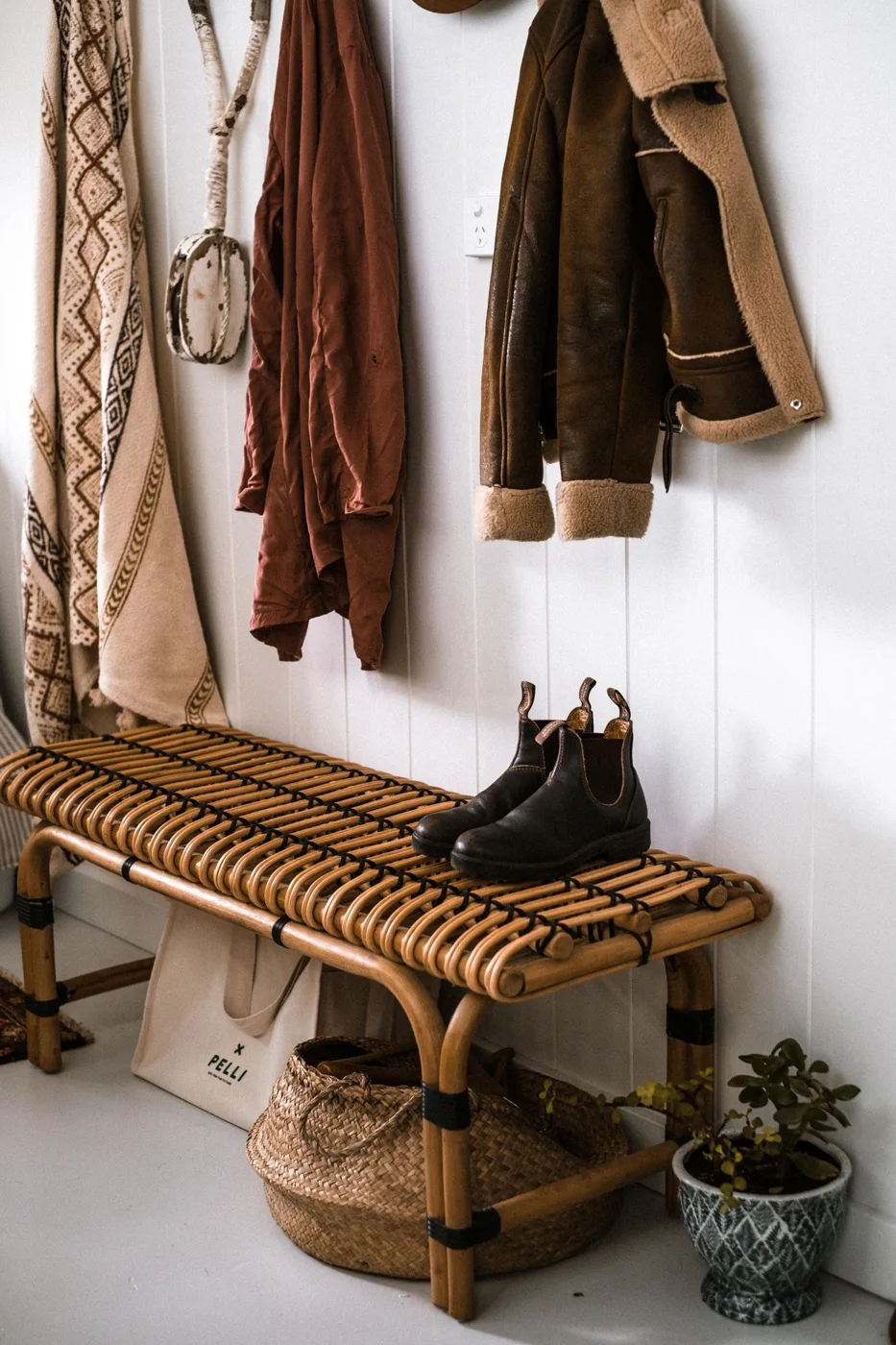
If you choose a bench with storage, check its intended load, assembly requirements, and whether it is actually designed for sitting. A narrow shelf is not a seat simply because it is at seat height. Try the seated position where possible, especially if putting on shoes requires balance or extra room. Prioritize a stable, appropriate piece over a clever combination that compromises both sitting and storage.
Keep coats from becoming a wall of fabric
Hooks are useful when they are easy to reach and spaced for the coats that will hang there. Too many garments on one hook make the whole group fall when someone takes the middle one. A rail can keep pieces separate but needs enough depth to avoid blocking the walkway.
Set a practical capacity: perhaps the current daily outer layer for each person, with spare coats elsewhere. Check hardware and installation requirements against the expected load. For rented homes, follow the lease and the product instructions rather than assuming an adhesive hook suits every surface or garment. The best storage is the one you can use confidently with the things you own.
Buy the least complicated missing piece
After the initial edit, identify what remains unsolved. If keys still disappear, a defined landing spot may be enough. If shoes block the door, you may need an accessible rack rather than a decorative cabinet. If bags have no place, a suitable hook or shelf could solve more than another basket.
Compare ease of cleaning, dimensions, and materials. An open woven basket can soften a room but may be difficult to clean after muddy use. A smooth tray is practical but may need a separate place when dry. Check return conditions and keep the purchase small until you know the routine works. Storage that requires everyone to change their habits dramatically may look organized only on the first day.
End the day with a short return
Return keys, hang the daily coats, put shoes into their assigned area, and take anything that belongs elsewhere farther into the home. This is a quick reset, not a full evening project. If the entrance overflows immediately, its assigned capacity may be unrealistic or occasional items may have drifted back.
A useful small entryway feels easy when you arrive tired and when you leave in a hurry. It does not have to hide every sign of life. For other practical ways to make small spaces more pleasant, browse our everyday living articles or the full latest-posts archive.