
Notice Which Scarf Edge Appears at Your Neckline
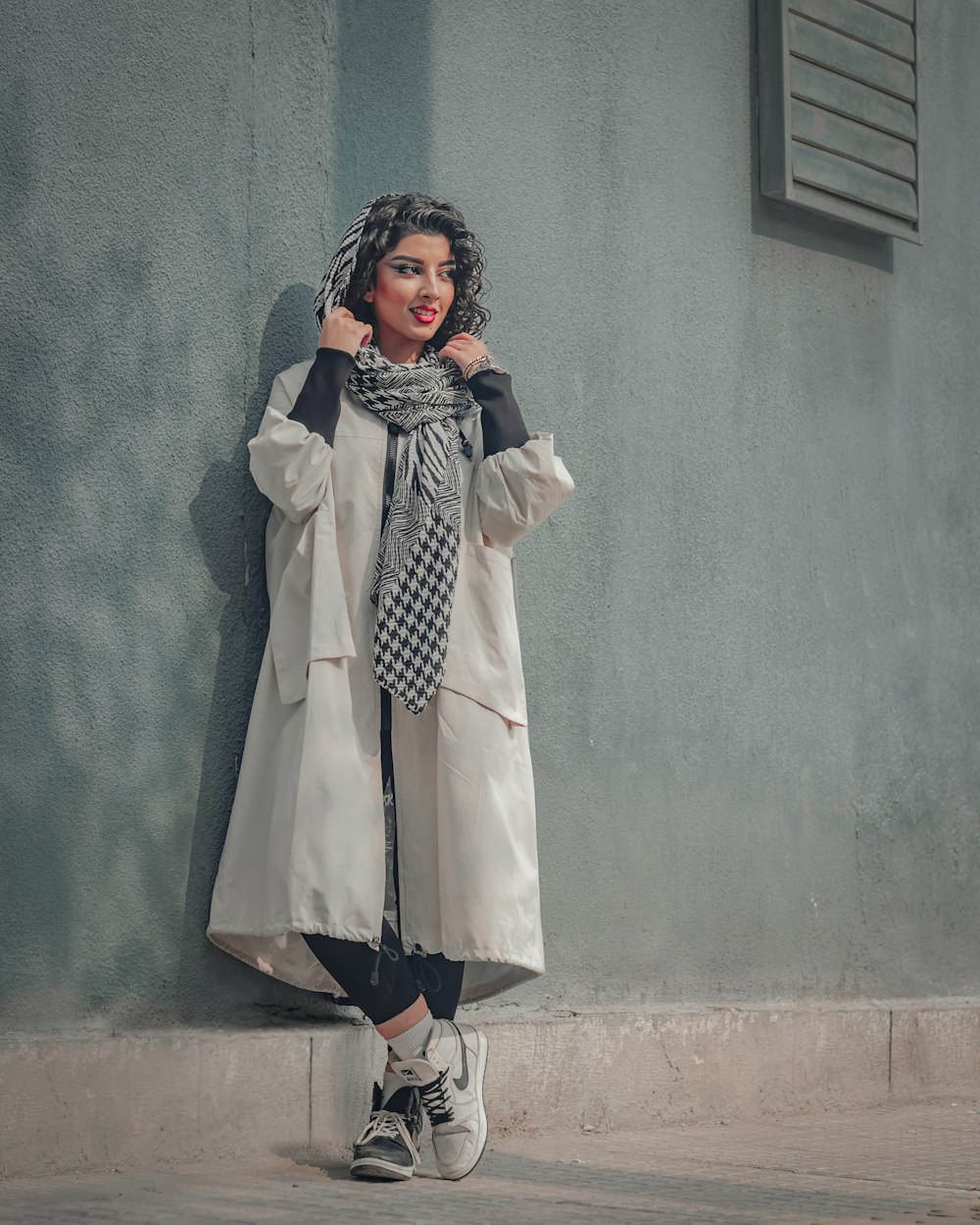
A scarf's visible edge can matter more to an outfit than its full unfolded pattern. A border, fringe or contrasting reverse may sit directly beside the neckline while the main design remains folded away. Check the arrangement you actually wear before deciding whether the scarf adds the detail you want.
Handle the scarf appropriately
Read the fabric's care guidance and use folds or arrangements suited to its construction. Avoid stretching, twisting or forcing an edge into a shape the material does not support. A delicate scarf may need different handling from a substantial winter piece, even if both are worn in a similar position.
Put on the actual top or coat and arrange the scarf normally. Let it settle without holding one corner in place for the mirror. Notice which edge remains visible after you move your head and shoulders. That is the arrangement the outfit will experience beyond the first photograph.
Look at the neckline together
Check the scarf beside the collar, fastening and any jewellery. A strong border can create a distinct line, while a soft edge may blend with the clothing. Neither is automatically better. Choose through your own preference and the physical space available around the neck.
The necklace-fastening guide helps keep jewellery practical if it shares that area. Make sure the pieces do not catch or crowd one another. An accessory should not require repeated disentangling simply to keep its decorative edge visible.
Try the ordinary movement
Sit, put on the bag and remove the outer layer where relevant. Notice whether the scarf's edge migrates into an uncomfortable position or whether the whole arrangement remains manageable. A small adjustment can be ordinary; constant attention may suggest another fold or another scarf is more useful for the day.
The indoor scarf guide helps distinguish warmth, texture and styling. Keep the actual function central. A pleasing border does not compensate for a scarf that feels unsuitable for the room or the weather, and a warm scarf does not need to display every part of its pattern.
Keep the outfit choice specific
Try the scarf with a second complete outfit before assigning it several wardrobe roles. A visible border may connect well with one coat and feel too busy beside another top. That distinction is useful information, not a reason to impose a universal rule on the scarf.
Should you always show the decorative edge? Only if you like the result and can arrange it comfortably. The reverse or a quieter fold may be equally useful. Choose the worn appearance rather than the flat product image, with the material's care and the day's movement included. A scarf earns its place through the part you enjoy and use, not through displaying its entire design at once.