
One Outfit for Coffee, a Long Afternoon, and Dinner
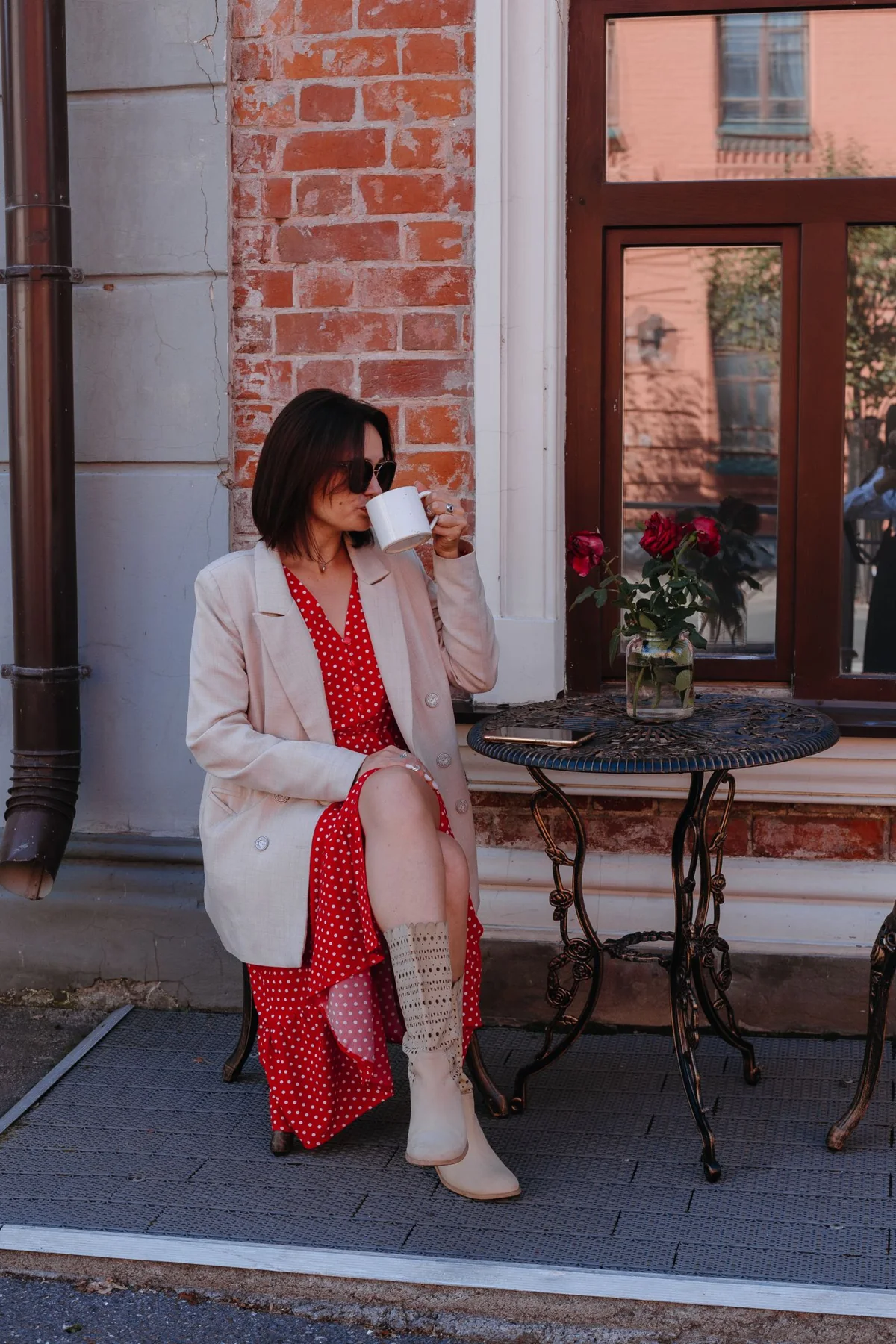
The awkward part of an all-day outfit is usually the gap between plans. You leave for coffee, visit a bookshop, take a walk, and suddenly it is nearly time for dinner. Going home to change would consume the best part of the afternoon. Carrying a second outfit feels like packing for a weekend. A useful answer is to dress for the most demanding part of the day, then adjust two small details when the mood changes.
This is a styling framework, rather than a list of products you need to buy. The photograph offers everyday outfit inspiration; the pictured clothing has not been identified or tested. Start with what is already in your wardrobe and identify the one practical problem that remains.
Begin with the route, not the restaurant
Consider how you will reach dinner. A fifteen-minute taxi ride and two hours on foot ask different things of a shoe. Check the forecast, the restaurant’s published dress guidance if it has any, and whether your afternoon includes sitting outside. Choose shoes you already know you can wear for that route. A polished loafer or plain sneaker can look deliberate with relaxed tailoring, but neither is automatically comfortable for every foot.
The next priority is sitting. Waistbands that feel acceptable standing at a mirror can become distracting over lunch. Try your base outfit on a dining chair. Reach for an imaginary bag, cross and uncross your legs, and check that the neckline stays where you want it. A restaurant outfit still needs to work while eating.
Choose an anchor with a quiet silhouette
A straight skirt, relaxed trousers, or a simple midi dress makes an adaptable anchor. For trousers, try a knit top with enough structure to hang smoothly, then add an unlined jacket or cardigan. For a dress, consider whether the neckline can accommodate a light layer without bunching. A sleeveless dress with a difficult armhole may need more thought than a shirt dress that already feels complete.
Keep your anchor in a color you enjoy wearing repeatedly. Navy, olive, rust, and cream can all work; there is no requirement to wear black. A restrained shape gives you freedom to change the impression through texture. Matte trousers with a softly lustrous blouse feel different from the same trousers with a cotton T-shirt, even if both combinations are equally uncomplicated.
Make the daytime version feel intentional
For coffee and errands, leave the outer layer open and keep your bag practical. Roll a cuff only if it stays comfortably in place. A half tuck is optional; a clean untucked hem may look better on a shorter top. Instead of adding several accessories, repeat one small detail, such as a warm metal earring and a bag buckle in a similar tone.
You can also use contrast: a fluid dress with a substantial flat shoe, or wide trousers with a neat knit. Try the combination in daylight before leaving. The point is to see the relationship between the pieces, rather than deciding whether every item looks expensive. Our wide-leg trouser guide explains the length and volume checks that help when trousers are the anchor.
Plan a genuinely small evening change
Pick one change you can make in a restroom without unpacking your bag. Add earrings, remove the daytime cardigan to reveal a finished neckline, or fasten a jacket that gives the silhouette more definition. A slim scarf can change the color near your face without becoming another garment to carry. Avoid an evening plan that depends on ironing, elaborate layering, or shoes you have never worn.
If you prefer a separate evening bag, test whether it fits inside your daytime tote and holds your essentials independently. Emptying a large bag onto a restaurant table is not much of an upgrade. Often the better choice is a modest shoulder bag used throughout the day, plus a foldable tote for purchases that can be put away before dinner.
Buy for the missing function
If your existing clothes almost work, describe the remaining need precisely. “A lightweight layer that fits over this dress and inside my tote” is a more useful shopping brief than “something chic.” Take the actual dress or a clear photograph to compare necklines and colors. Check whether the layer wrinkles when folded, whether sleeves fit comfortably underneath, and whether its care instructions suit your routine.
Spend extra only on a difference you will use: a reliable closure, a better sleeve shape, or a fabric that feels comfortable against your skin. Decorative buttons do not solve a fit problem. Borrowing a jacket or having an existing hem adjusted may provide a better result than buying a complete new look. Consult the closet-gap checklist before deciding.
The leaving-home check
Put your keys, phone, payment card, and any necessary medication in the bag you will actually carry. Sit down for five minutes. Walk outside if conditions allow. Notice slipping straps, a dragging hem, or a layer that needs constant readjustment. Fix those issues before adding jewelry. An outfit that stays comfortable leaves more attention for the people and places you planned to enjoy.
You do not need a visibly dramatic transformation between afternoon and evening. A coherent base, shoes suited to the route, and one considered adjustment are enough to make the day feel joined together. The best purchase is sometimes no purchase at all: simply discovering which pieces already move comfortably through your plans.