Linen Layers for Warm Afternoons and Cooler Evenings
Some days ask for an outfit that can expand and contract. The walk to lunch feels warm, the indoor table is chilly, and the journey home happens after the sun has gone. Linen pieces can be useful in this situation when their weight, shape, and coverage suit your needs. A shirt worn open over a comfortable base is often easier to adjust than a complicated stack of thin garments.
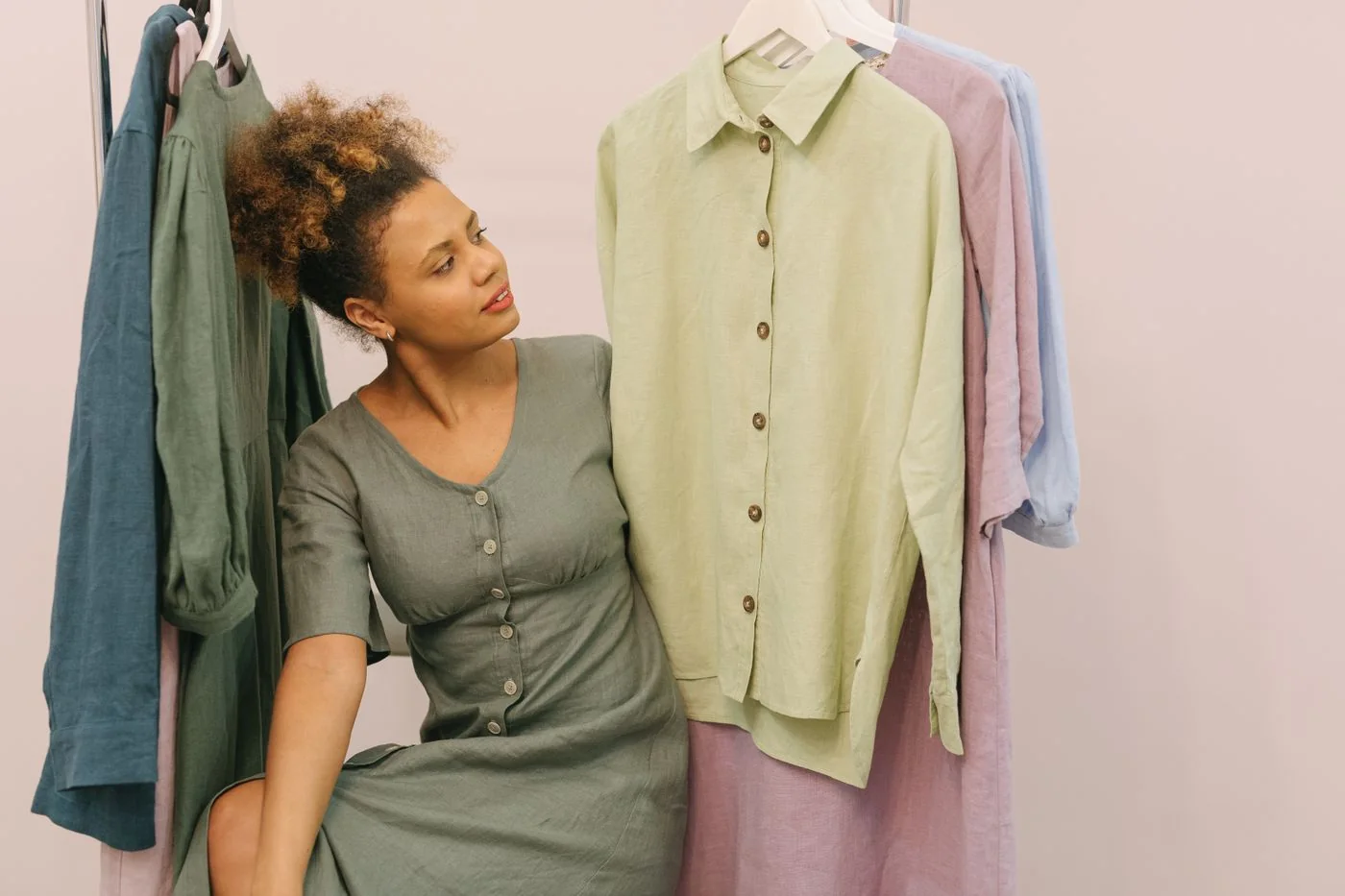
Start with your own tolerance for creases and temperature changes. Linen is not a promise that every item will feel cool, opaque, or easy to wash. A dense blend, lining, or particular cut can change the experience. Read each garment’s composition and care instructions, and judge the actual fabric rather than buying a category name. The shop photograph is contextual inspiration, not a product identification.
Choose one layer to move
Give one garment the job of coming on and off. This might be an open shirt, a loose jacket, or a light cardigan over a linen dress. If every piece needs repositioning whenever you remove a layer, the system becomes a nuisance. Try the full outfit both with and without that outer piece, checking that the base still feels finished and gives the coverage you want.
A tank can work under an open shirt, but compare its straps and neckline against the shirt collar. A higher neckline gives one effect; a deeper scoop gives another. Neither is mandatory. Check that the base does not cling uncomfortably where the outer layer rubs against it. Leave enough room at the armhole to move without dragging the layers together.
Think about weight before color
Two cream linen garments can have very different personalities. A crisp shirt may stand away from the body, while a soft trouser falls into long folds. Combining them can create useful contrast. Two similarly substantial pieces may feel more like a suit, which can be attractive but may not suit a casual afternoon. Hold the fabrics together and notice their behavior before deciding whether the shades match perfectly.
If the trousers are especially fluid, a shorter or more defined top can clarify the silhouette. If the shirt is large and airy, try a straighter trouser or wear the shirt open over a neat base. Our wide-leg proportion guide offers fitting checks for rise and length. Use the relationship you enjoy rather than adding a belt automatically.
Test opacity where it matters
Look at light-colored garments in natural light. Pocket bags, seam allowances, and underwear can show differently from what you see under a fitting-room spotlight. Sit down and bend gently to check whether stretching changes the coverage. Choose underlayers that feel comfortable and create the level of discretion you prefer; do not assume that a thicker lining is always the best answer for a warm day.
For a shirt, check the placket while seated. Gaping may mean the cut or size is unsuitable, rather than that you need to hide it with jewelry. For trousers, examine the seat, pockets, and waistband. If you only feel comfortable when wearing a long outer layer, decide whether that restriction fits your plans. A piece that works only in one carefully managed arrangement may not be a useful addition.
Make creases part of the decision
There is a difference between accepting a naturally relaxed appearance and accepting a garment that frustrates you. Gently fold the sleeve or sit in the trousers during a try-on if permitted. See whether the resulting texture feels appealing to you. Online, look for photographs showing the garment in motion or on a seated model, while recognizing that images can be styled and retouched.
Read the care label before mentally adding the item to a travel wardrobe. Consider whether you have time and space to dry it as instructed. A garment that needs more attention than your routine allows may be a poor choice even if you love the fabric. Follow its label for washing and pressing; broad advice for “all linen” cannot account for trims, dyes, linings, and blends.
Add warmth without rebuilding the outfit
A fine cardigan can fit under a loose linen jacket if the sleeves allow room. Alternatively, replace the open shirt with a more substantial layer when you leave home later in the day. A scarf offers limited, localized warmth and may be enough for a short evening walk, but it should not be treated as protection for genuinely cold conditions.
Decide where the removed layer will go. A shirt that folds into your bag is convenient; a long structured jacket may be awkward to carry through a market. Wear the complete combination with your actual bag before leaving. Check whether a rough strap catches the fabric and whether the jacket bunches where the strap sits. These small frictions often determine whether an outfit gets repeated.
Shop for a specific combination
Bring a photo of two or three existing pieces when looking for a linen layer. Compare sleeve volume, hem length, and color in similar lighting. Avoid buying a complete matching set unless you like both pieces separately and expect to wear the set together. Sometimes a single shirt will unlock more outfits than a coordinated trouser you do not need.
Try an outfit at home with the tags attached, following the store’s return conditions. Make coffee, sit at a table, and move through a few ordinary motions without soiling the garment. Then ask whether the layer solves the original temperature problem. If it adds fuss instead, consider a different cut or simply use a familiar cotton shirt. Fabric preference should support your day, not become another task inside it.