Wide-Leg Trousers: Find Your Proportions Before You Buy
Wide-leg trousers can look relaxed on a hanger and unexpectedly complicated at home. The waistband fits, yet the fabric gathers at the shoes. A favorite shirt disappears inside the volume. Buying a smaller size rarely solves these problems because width, rise, and length are separate decisions. Begin by deciding where you want the trousers to sit and what shoes you will usually wear with them.
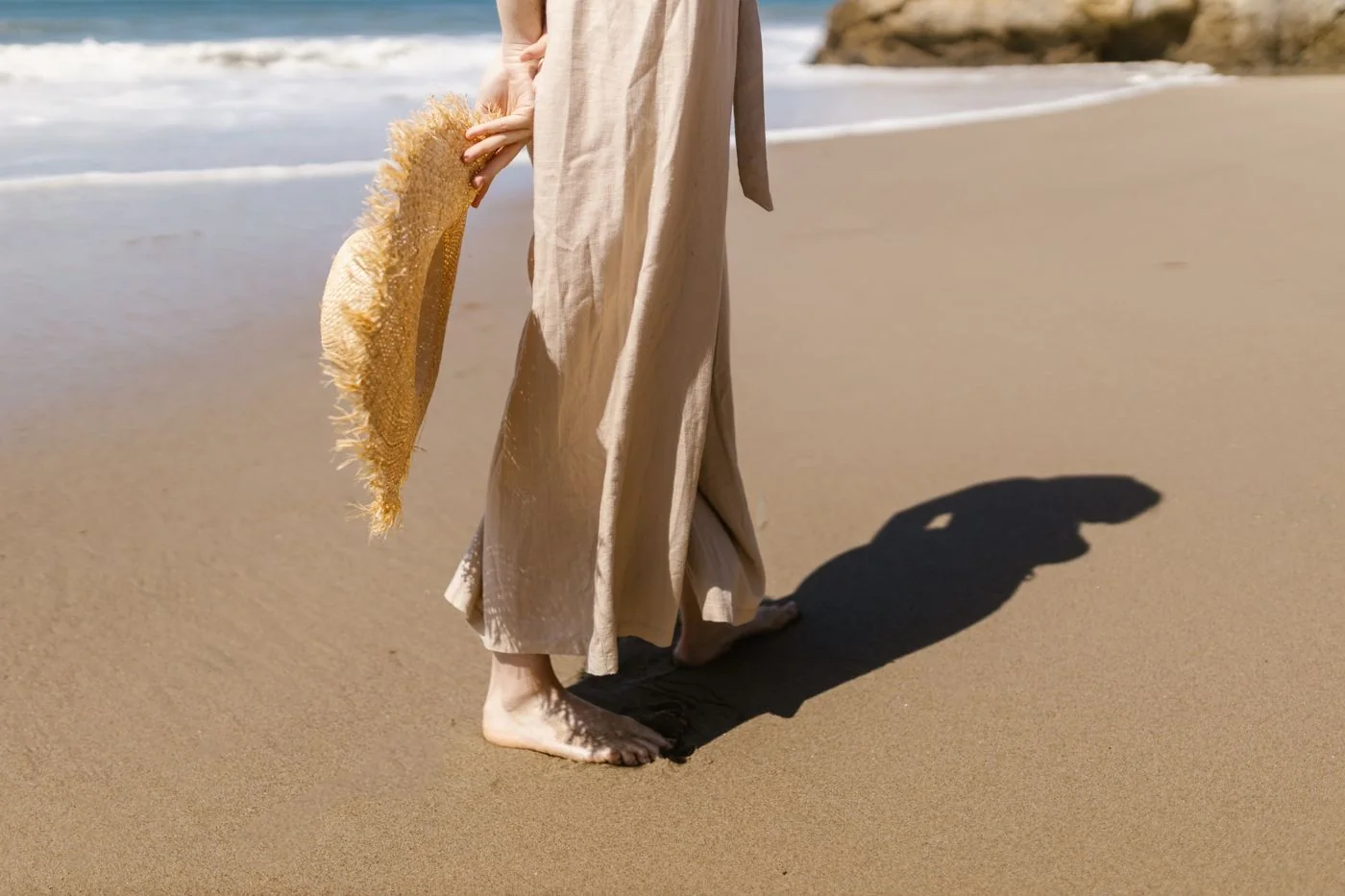
There is no universally flattering ratio or rule that a particular body type must follow. Proportion is a relationship between garments and your preferences. The beach photograph illustrates a relaxed trouser silhouette, not a specific product recommendation. The following checks help you judge a pair in ordinary daily situations rather than relying on a styled product photograph.
Separate waistband fit from rise
The rise determines where the waistband can sit comfortably relative to the crotch. A high rise on one person may feel mid-rise on another. When trying on trousers, let them settle where the construction allows instead of pulling the waistband toward a preferred spot. If lifting it creates pulling at the crotch or rear seam, the shape may be wrong for you even when the waist measurement seems suitable.
Sit, bend, and take several long steps. Check whether the pockets flare or the fastening tilts. A waistband that requires a tight belt to stay in place may bunch under a light top. Conversely, a fitted waist with comfortable room through the seat can feel secure without compression. Altering a modestly loose waist may be possible; discuss substantial changes with a tailor before removing return tags.
Choose the hem for a real shoe
Bring the shoes you expect to wear most often. A hem designed around a high heel can drag when paired with a sneaker. Decide whether you want a full-length line, a visible shoe, or an ankle-length cut. None is inherently more elegant. What matters is whether the hem clears the ground and allows you to walk without catching the fabric beneath your heel.
Walk up a step and turn quickly if the fitting space allows. Look from the side as well as the front. A deep fold at the ankle can be a deliberate look, but it also adds visual weight and can collect dirt outdoors. If you need two very different shoe heights, two hem lengths may be more practical than forcing one pair to cover every occasion.
Understand what the fabric is doing
Soft, fluid fabric falls close to the legs when standing still and opens with movement. Stiffer cloth holds the width farther from the body. Neither behavior is a quality verdict. Think about the silhouette you want: a floating summer trouser, a structured work shape, or something in between. Pinch a little fabric and release it to understand how it recovers, without assuming that every crease is a defect.
Light colors also deserve an opacity check. Look at pocket bags and seams in daylight, and see whether the fabric becomes more transparent when stretched across the seat. Lining can help with coverage but may change how warm a pair feels. Read the composition and care label rather than guessing from the word “linen” or “tailored” in a product title.
Give the top a clear ending
A top does not have to be tight to work with wide trousers. It helps, however, to know where it ends. A neat knit ending near the waistband creates one relationship; a longer open shirt over a tank creates another. Try the whole hem untucked before assuming you need a half tuck. Tucking thick fabric into a fitted waistband may introduce bulk that was not present in either garment alone.
For a soft blouse, tuck it loosely and lift your arms to leave movement room. With an oversized shirt, consider wearing it open so the inner layer establishes a separate vertical line. A boxy cropped jacket can provide a defined endpoint without exposing your waist. These are options to compare, not instructions to conceal or correct your body.
Use footwear to set the mood
A slim flat can make structured trousers feel lighter; a substantial sneaker can ground a fluid pair. Consider the toe shape visible below the hem and whether you like that balance. Dark shoes under pale trousers create an obvious endpoint, while similar colors make the transition quieter. Photograph both combinations from a comfortable distance rather than judging them only in a tilted mirror.
If the trousers are for a full day out, follow the route-first approach in our coffee-to-dinner outfit guide. Comfort and hem clearance should be established before choosing the finishing accessories. A beautiful trouser that requires shoes you dislike wearing will probably remain on its hanger.
A focused buying decision
Compare two pairs with different cuts rather than collecting five nearly identical sizes. Note the actual difference: room at the thigh, pocket placement, waistband shape, or drape. Keep the pair that works with at least two tops and your most useful shoes. If neither works, record what failed so the next shopping trip starts with information.
Budget for hemming only after understanding the return policy and the likely alteration. Ask whether shortening will change a tapered or shaped leg. Avoid buying an uncomfortable pair because the color is perfect or the discount is temporary. Good wide-leg trousers should offer room to move and a silhouette you enjoy, with no ongoing negotiation between your waistband and your shoes.